You have no items in your shopping cart.
Subtotal: €0.00


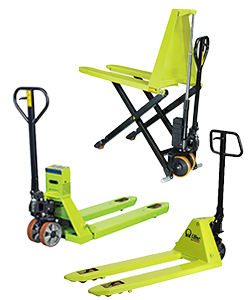
Pallet trucks are the indispensable solutions for the needs of moving, lifting and storing goods in warehouses, distribution centers and production departments. The transpallet was created to move wooden or plastic pallets thanks to the lifting system that allows the load to be raised from the ground by a few centimeters to allow safe and controlled movement. It is therefore the inevitable trolley in every warehouse.
The wide range is complete with manual pallet trucks in which the drawbar allows both to operate the lifting device and to move the trolley. The absence of an engine means that hand pallet trucks are versatile, relatively light and can be used without certification.
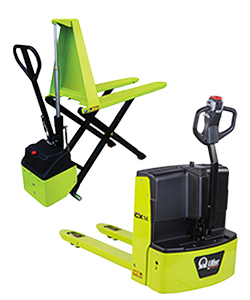
The electric pallet trucks are equipped with a motor that guarantees the movement of the trolleys and the lifting of the forks. These are the solutions that ensure maximum productivity: the automatisms reduce work times and the risk of accidents, but for the use of some models (with a seated man on board and with a platform) it is necessary to have adequately trained personnel available.
To meet ever-changing needs, pallet trucks are available with load lifting capacity from 500 to 1000 kg, suitable for use in the food, pharmaceutical or commercial areas. In addition, versions are available with lifts from 1500 kg up to 3000 kg designed for use in logistics centers, in transport activities and for intensive use and with heavy loads.

Plastic bins

Security and environment
Bins
Bunded pallets in polyethylene or steel
Drum dispensing and supports
Outside storage containers and cabients in steel and polyethylene
Metal sheds, portacabins and shipping containers, portable toilets
Metal shelving for the storage of drums, IBC and containers
Gas bottle storage depots and cabinets
Safety barriers and jersey barriers

Shop fittings and workshop storage

Trucks and warehouse trolleys

Metal containers
Steel containers and laundry trolleys
Wire containers
Dumping bins and tipping skips
Sheet metal industrial containers
Mesh industrial containers
Drop bottom skips and bins
Open fronted metal containers
Metal storage boxes and bins
Crane boat skips and concrete buckets for building
Site boxes for tools

Insulated containers

Packaging and shipping supplies

Pallets

Wheels and castors

Lifting equipment and loading

Machine tools and processing machinery

Power tools and hand tools
Tool sets and assortments
Tool kits in cases and boxes
Wrenches and spanners
Screwdrivers
Male-end wrenches
Bits and bit holders
Sockets and accessories
Torque wrenches and multipliers
Pliers, wire cutters and nippers
Drills, impact drivers and pneumatic tools
Punches, drift, pin and centre punches
Car jacks, car and motorcycle lifters
Car battery chargers and starters
Cable reels and hose reels