You have no items in your shopping cart.
Subtotal: €0.00


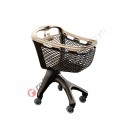
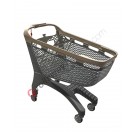
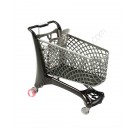
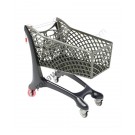
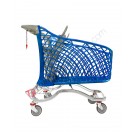
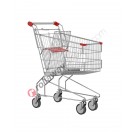
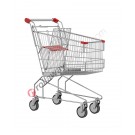
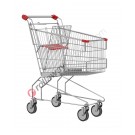
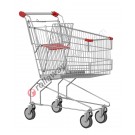
Shopping carts are the comfortable and professional solutions for transporting bulky expenses within shops. Indispensable in all supermarkets, shops, commercial spaces and small and large outlets, the shopping carts are available in standard colors, but can be customized with custom colors and the customer's brand. Furthermore, they are built in compliance with all safety regulations.
Made of painted steel or plastic, the shopping carts are produced in different types and capacities to meet all the needs of the sales area. In fact, there are 90-liter 4-wheeled trolleys suitable for small outlets and superettes, 100, 150 and 180-liter supermarket trolleys and 240-liter shopping carts for hypermarkets and shopping centers.
The different models allow to respect not only practical needs, but also different aesthetic canons. The wide range makes it possible to purchase the shopping carts that best suit the context of the store: classic shapes are available, but also compact trolleys adapted to the new formats in terms of space and aesthetics.
To meet ever-changing needs, the shopping carts are available with a wide range of accessories and wheels, which can be customized on request with customized colors, brand or customer logo. Finally, all products are built with reach and resistance certified by internationally recognized research institutes.
From €105.00 (ex. VAT)
From €125.00 (ex. VAT)
From €100.00 (ex. VAT)
From €110.00 (ex. VAT)
From €135.00 (ex. VAT)
From €132.60 (ex. VAT)
From €148.80 (ex. VAT)
From €165.00 (ex. VAT)
From €169.80 (ex. VAT)

Plastic bins

Security and environment
Bins
Bunded pallets in polyethylene or steel
Drum dispensing and supports
Outside storage containers and cabients in steel and polyethylene
Metal sheds, portacabins and shipping containers, portable toilets
Metal shelving for the storage of drums, IBC and containers
Gas bottle storage depots and cabinets
Safety barriers and jersey barriers

Shop fittings and workshop storage

Trucks and warehouse trolleys

Metal containers
Steel containers and laundry trolleys
Wire containers
Dumping bins and tipping skips
Sheet metal industrial containers
Mesh industrial containers
Drop bottom skips and bins
Open fronted metal containers
Metal storage boxes and bins
Crane boat skips and concrete buckets for building
Site boxes for tools

Insulated containers

Packaging and shipping supplies

Pallets

Wheels and castors

Lifting equipment and loading

Machine tools and processing machinery

Power tools and hand tools
Tool sets and assortments
Tool kits in cases and boxes
Wrenches and spanners
Screwdrivers
Male-end wrenches
Bits and bit holders
Sockets and accessories
Torque wrenches and multipliers
Pliers, wire cutters and nippers
Drills, impact drivers and pneumatic tools
Punches, drift, pin and centre punches
Car jacks, car and motorcycle lifters
Car battery chargers and starters
Cable reels and hose reels
Shopping Options