You have no items in your shopping cart.
Subtotal: €0.00


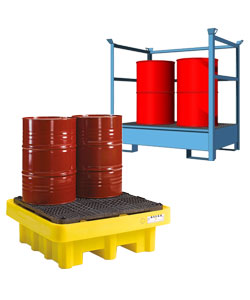
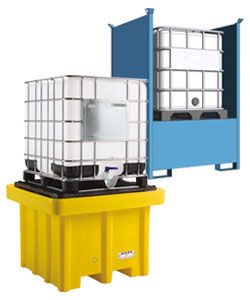
Polyethylene or steel sump, spill and bunded pallets are the professional and compliant solution for the storage of drums, cisterns, bottles and jerry cans. In fact, in full compliance with environmental hygiene and safety regulations, the containment pallets are the perfect products to avoid accidental spills of oils, solvents and polluting liquids inside the workplace and, more generally, the environment. The wide range is complete with over 60 bunded pallets ideal for drums and tanks, but also for small and large containers.
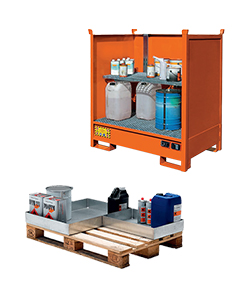
To meet all needs, bunded pallets are available in both steel and polyethylene. Steel bunded pallets are available with galvanizing and painting treatment and are equipped with shaped feet. On the other hand, virgin PE polyethylene bunded pallets guarantee total corrosion protection, making them suitable for the containment and storage of acids, alkaline solutions, oils and chemicals.
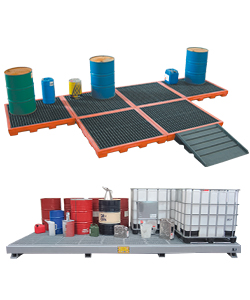
The range is complete with spill pallets for drums also in the with-walls and wheels versions and sump pallets for ibc with or without walls. In addition, it is possible to select small bunded pallets for storing small containers, but also large ones when looking for a unique solution for storing different drums, containers and tanks together.
Bunded pallets are available in a wide range of solutions, sizes and heights, they can be equipped with wall structures for overlapping, splash guard walls and different containment capacities to meet all usage and space needs. Finally, they are built in accordance with UNI 10025, equipped with a plate with technical data and safety labels and tested with destructive tests by qualified operators according to UNI EN 473.

Plastic bins

Security and environment
Bins
Bunded pallets in polyethylene or steel
Drum dispensing and supports
Outside storage containers and cabients in steel and polyethylene
Metal sheds, portacabins and shipping containers, portable toilets
Metal shelving for the storage of drums, IBC and containers
Gas bottle storage depots and cabinets
Safety barriers and jersey barriers

Shop fittings and workshop storage

Trucks and warehouse trolleys

Metal containers
Steel containers and laundry trolleys
Wire containers
Dumping bins and tipping skips
Sheet metal industrial containers
Mesh industrial containers
Drop bottom skips and bins
Open fronted metal containers
Metal storage boxes and bins
Crane boat skips and concrete buckets for building
Site boxes for tools

Insulated containers

Packaging and shipping supplies

Pallets

Wheels and castors

Lifting equipment and loading

Machine tools and processing machinery

Power tools and hand tools
Tool sets and assortments
Tool kits in cases and boxes
Wrenches and spanners
Screwdrivers
Male-end wrenches
Bits and bit holders
Sockets and accessories
Torque wrenches and multipliers
Pliers, wire cutters and nippers
Drills, impact drivers and pneumatic tools
Punches, drift, pin and centre punches
Car jacks, car and motorcycle lifters
Car battery chargers and starters
Cable reels and hose reels