You have no items in your shopping cart.
Subtotal: €0.00


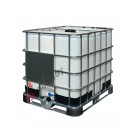
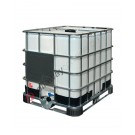
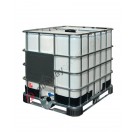
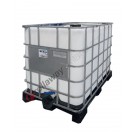
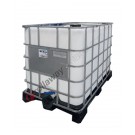
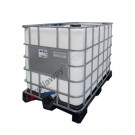
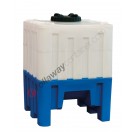
IBC tanks and IBC totes are the ideal solutions for the transport and storage of liquids of chemical and food origin. They are professional products designed and manufactured for all companies operating in the industrial sector. They can be used both indoors and outdoors thanks to the UV-resistant polyethylene construction. Furthermore, the range is complete with versions with different capacities to satisfy every need.
The quality of the plastic tanks is guaranteed by the attention paid to the choice of raw materials and to the production techniques: the polyethylene used is of the highest quality and the so-called "rotation" technique makes it possible to obtain unique monoblocks without joints for a long-term estate. Furthermore, the plastic tanks produced in this way are elastic and impact resistant.
The range is complete with IBC tanks on wooden, plastic or hybrid pallets, contained in reinforced metal structures, equipped with loading hatch and unloading unit housed in a niche so as not to suffer damage due to any impact. Furthermore, they are available in the version for food and in accordance with ADR / ONU for the transport and storage of dangerous goods.
To meet ever-changing needs, palletized plastic tanks are available for the storage and transport of liquids and UN approved IBC tanks in accordance with ADR for the transport and storage of dangerous goods on the road.
From €199.80 (ex. VAT)
From €120.00 (ex. VAT)
From €223.20 (ex. VAT)
From €198.00 (ex. VAT)
From €120.00 (ex. VAT)
From €223.20 (ex. VAT)
From €871.20 (ex. VAT)
From €924.00 (ex. VAT)

Plastic bins

Security and environment
Bins
Bunded pallets in polyethylene or steel
Drum dispensing and supports
Outside storage containers and cabients in steel and polyethylene
Metal sheds, portacabins and shipping containers, portable toilets
Metal shelving for the storage of drums, IBC and containers
Gas bottle storage depots and cabinets
Safety barriers and jersey barriers

Shop fittings and workshop storage

Trucks and warehouse trolleys

Metal containers
Steel containers and laundry trolleys
Wire containers
Dumping bins and tipping skips
Sheet metal industrial containers
Mesh industrial containers
Drop bottom skips and bins
Open fronted metal containers
Metal storage boxes and bins
Crane boat skips and concrete buckets for building
Site boxes for tools

Insulated containers

Packaging and shipping supplies

Pallets

Wheels and castors

Lifting equipment and loading

Machine tools and processing machinery

Power tools and hand tools
Tool sets and assortments
Tool kits in cases and boxes
Wrenches and spanners
Screwdrivers
Male-end wrenches
Bits and bit holders
Sockets and accessories
Torque wrenches and multipliers
Pliers, wire cutters and nippers
Drills, impact drivers and pneumatic tools
Punches, drift, pin and centre punches
Car jacks, car and motorcycle lifters
Car battery chargers and starters
Cable reels and hose reels
Shopping Options